What calisthenics is and whether it builds muscle
Calisthenics is strength training with your own body weight: push-ups, pull-ups, dips, squats and their variations. You don't need a gym, but the rules are the same as with weights: hard sets, enough of them each week, and a little harder each time.
It builds muscle. In an 8-week trial, push-ups adjusted to a load similar to 40% of the bench press max grew the chest and triceps and raised strength just like bench pressing that load (Kikuchi and Nakazato, 2017). In another, 4 weeks of push-ups with progressively harder variations raised the bench press max, just as in the group that trained on the bench (Kotarsky et al., 2018). The key is ending sets close to failure: that way, light and heavy loads give similar hypertrophy (Schoenfeld et al., 2017).
- Push. Push-ups, dips and pike push-ups for the shoulders.
- Pull. Pull-ups and inverted rows. They are the hardest to replace without a bar.
- Legs. Squats, lunges and, later on, the Bulgarian split squat and the pistol squat.
- Core. The plank and hanging knee or leg raises.
Calisthenics workout for beginners
This session needs no bar: you can do the inverted row under a sturdy table, holding the edge. Each exercise has an easier version so that every set is done with good form.
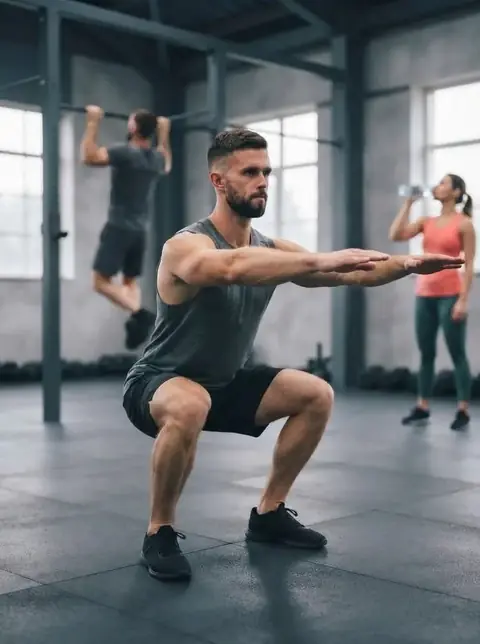
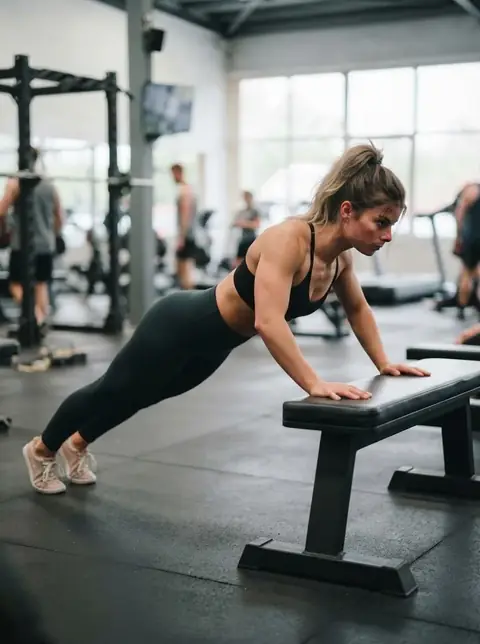
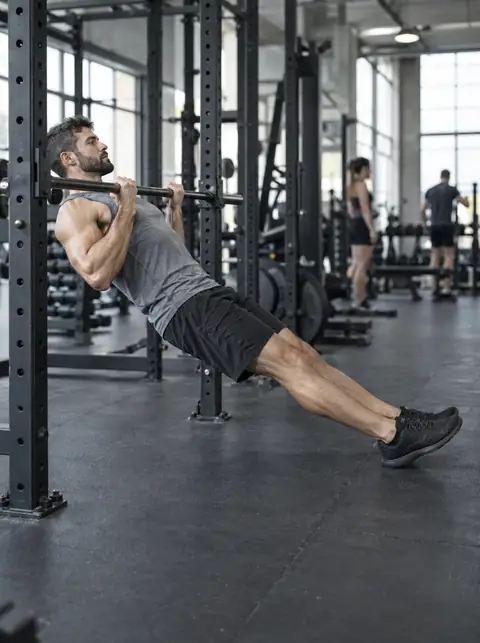
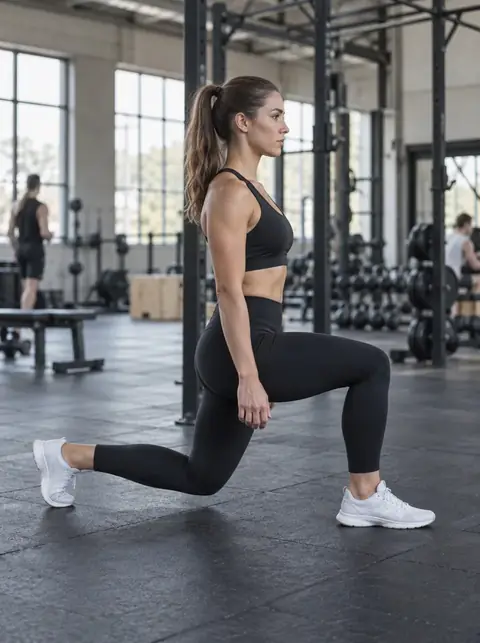
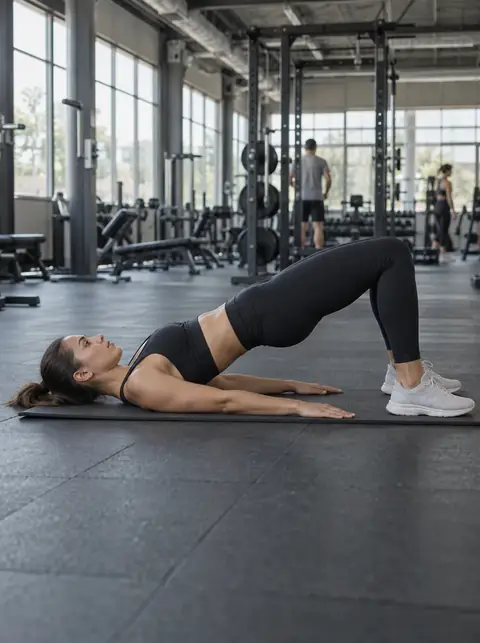
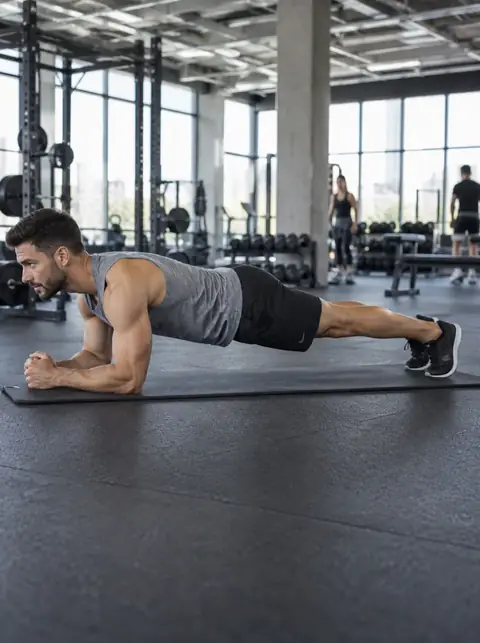
If incline push-ups are still hard, start with knee push-ups. For the lunge, reps are per leg. Once you have the basics, it also works as a full-body workout at home.
Calisthenics workout with a pull-up bar and dip bars
With a pull-up bar and dip bars, at a park or at home, you can load your back, chest and arms much more. Do pull-ups and dips first, since they are the ones you most want to progress: the exercise done first gains the most strength (Nunes et al., 2021).
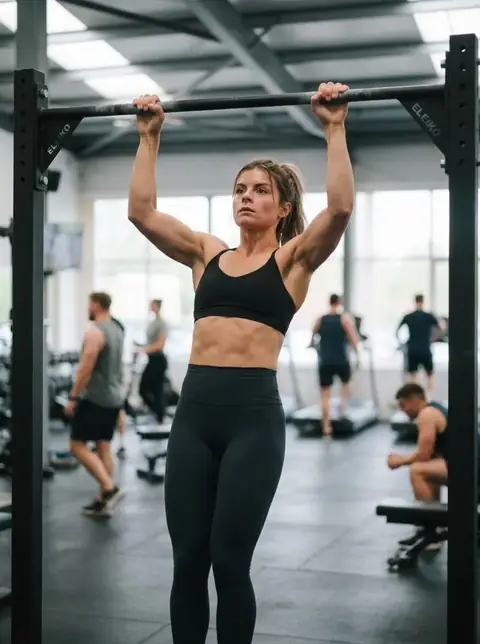
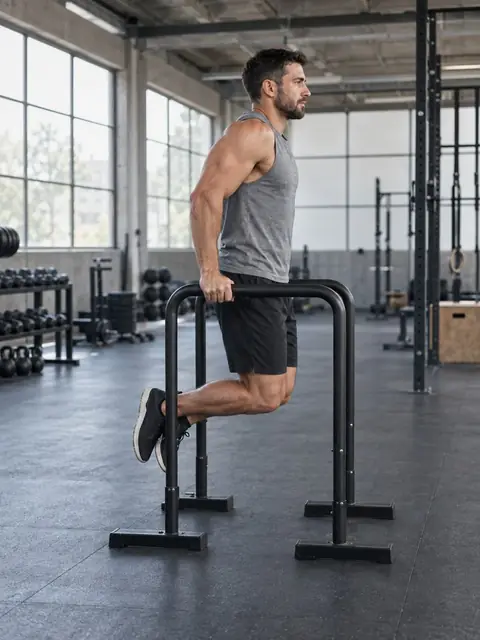
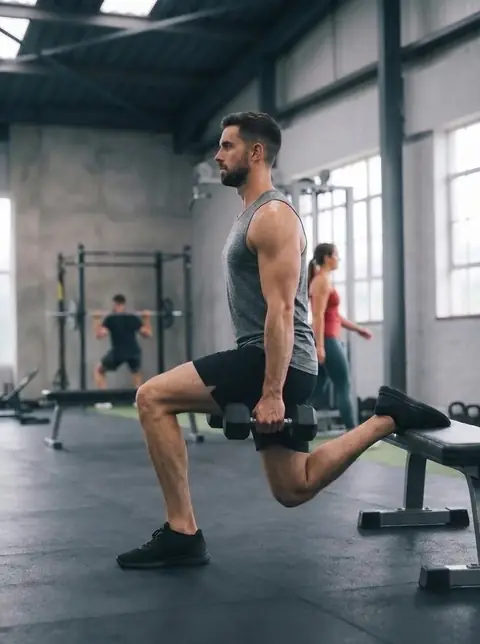
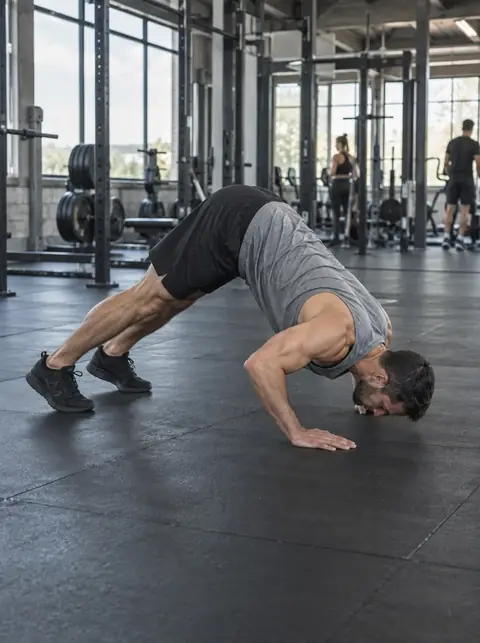
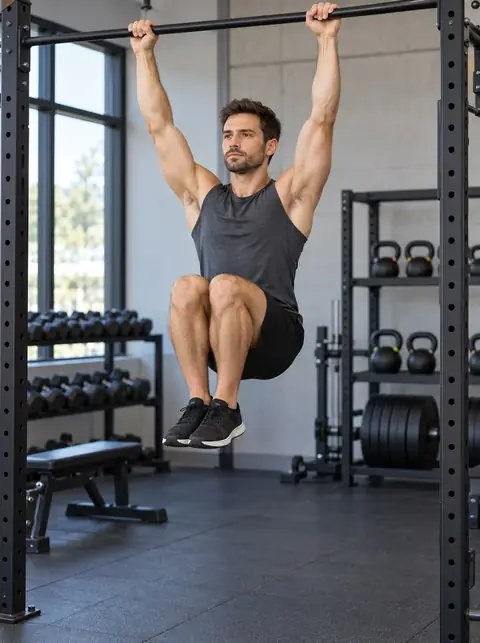
Can't do a pull-up yet? Use the band-assisted pull-up and switch to the regular one once you can do 8 clean reps. For the Bulgarian split squat, reps are per leg.
Advanced calisthenics workout
Once the basic variations go past 15 or 20 reps, you need more difficulty to keep your sets hard. This is where single-leg and single-arm versions, added weight and wall-supported exercises come in.
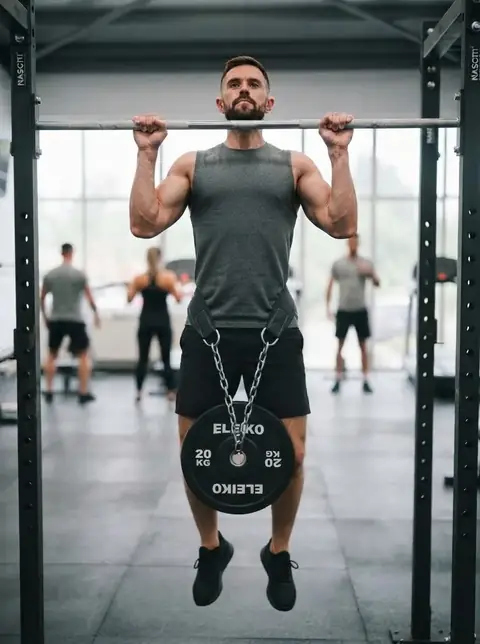
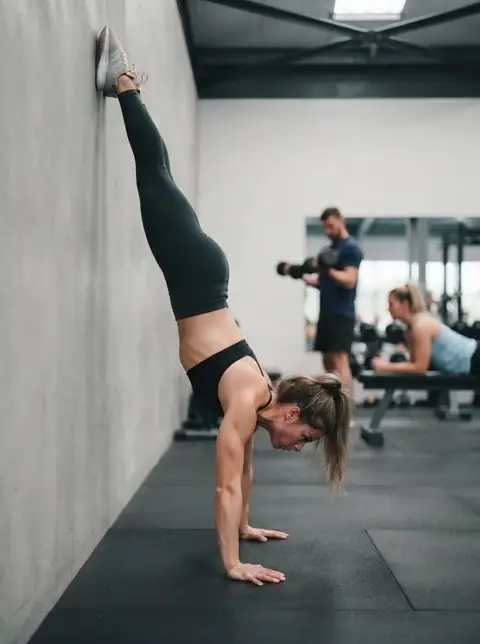
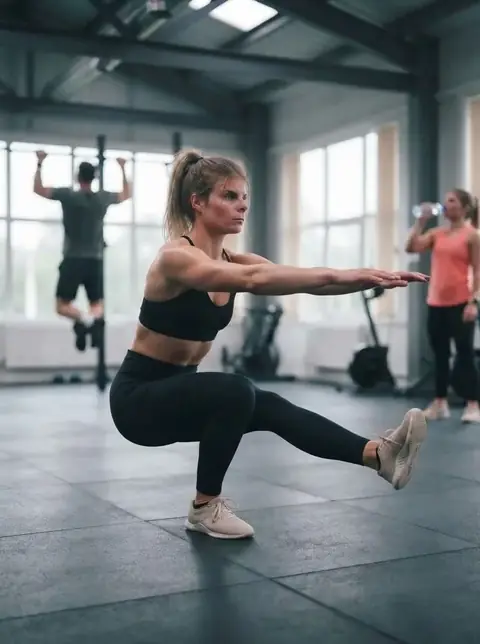
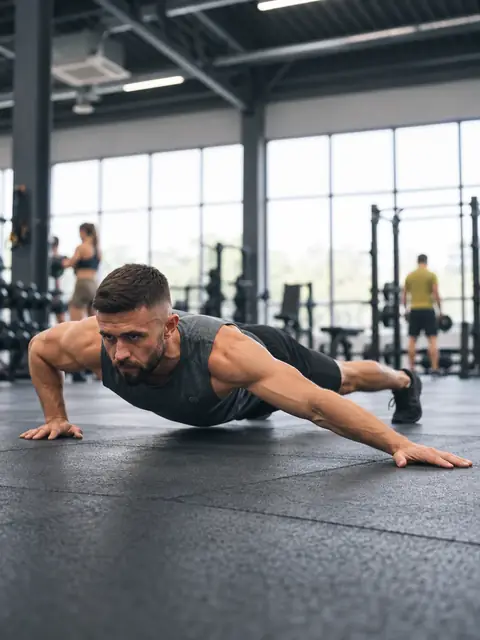
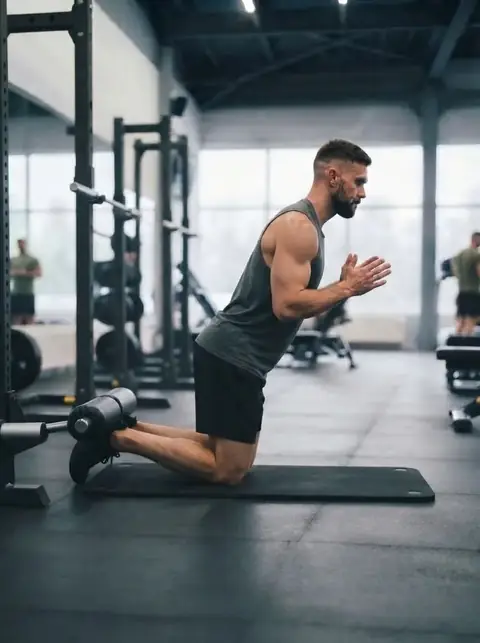
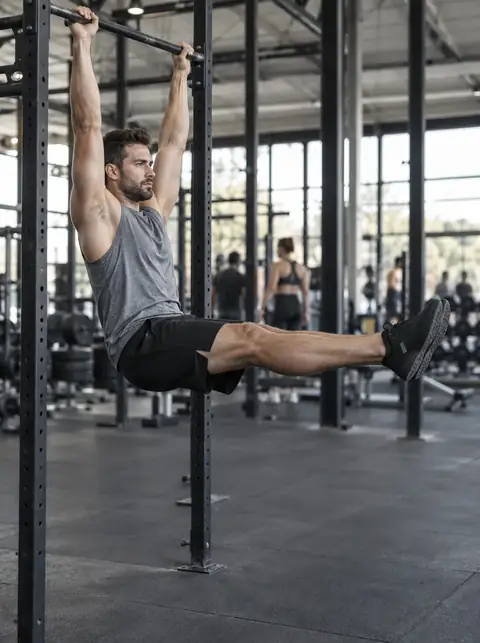
The handstand push-up is done with your feet against a wall. For the pistol squat and the archer push-up, reps are per side. You can do the Nordic curl with your feet hooked under a heavy piece of furniture.
How to progress in calisthenics without adding weight
Without plates, you make it harder by changing the exercise: less support, one leg, a steeper angle or a longer range of motion. That is what the Kotarsky et al. (2018) trial did, moving to the next variation to stay within the rep range. Adding reps with the same variation also works: in trained people it gave growth similar to adding load (Plotkin et al., 2022).
| Pattern | Start | Next | Advanced |
|---|---|---|---|
| Push | Incline or knee push-up | Push-up and parallel bar dips | Archer push-up |
| Shoulders | Pike push-up | Feet-elevated pike push-up | Handstand push-up |
| Pull | Inverted row | Band-assisted pull-up | Pull-up and weighted pull-up |
| Legs | Squat and reverse lunge | Bulgarian split squat | Pistol squat |
| Core | Plank | Hanging knee raise | Hanging leg raise |
A simple rule: once you hit the top of the rep range on every set, move to the next variation and go back to the bottom of the range. The progressive overload guide explains the full method.
How many sets and how many days per week
The ACSM links the most hypertrophy to 10 or more sets per muscle per week, with gains flattening around 18 to 20 (Currier et al., 2026). When you're starting out, fewer sets still bring progress (Currier et al., 2023). With the workouts above, the math is simple: 3 sets of push-ups per session, 2 or 3 times a week, add up to 6 to 9 sets for your chest.
- Split it however suits you. With the same weekly volume, training a muscle once or several times a week gives similar hypertrophy (Schoenfeld, Grgic and Krieger, 2019).
- Stop close to failure. Going to failure doesn't build more muscle than leaving 1 or 2 reps in reserve (Refalo et al., 2023). With body weight, close to failure means the next rep would break your form.
- Rest long enough. Resting more than 60 seconds between sets has a small benefit, and going past 90 changes almost nothing (Singer et al., 2024).
- Leave a day between sessions. On a full-body plan, alternate training and rest days, for example Monday, Wednesday and Friday.
Questions
Can you build muscle with calisthenics?
Yes. Push-ups gave chest and triceps growth similar to light bench pressing over 8 weeks. What matters is that your sets are hard and that you raise the difficulty over time.
How many days a week should I do calisthenics?
2 to 3 days of full-body workouts are enough to progress. If you want more days, split the week into push, pull and legs.
What if I can't do a single pull-up?
Start with inverted rows and band-assisted pull-ups, and add dead hangs from the bar. Once you can do 8 clean assisted pull-ups, try a regular one.
Is calisthenics good for weight loss?
It helps. In an analysis of 43 trials in college students, calisthenics lowered body mass index compared with not training, though without clear differences from other kinds of exercise (Li et al., 2025). What matters most is a calorie deficit.
Calisthenics or weights: which is better?
For muscle and strength, both work if your sets are hard. Weights make it easier to add load in small steps; calisthenics can be done anywhere. You can combine them.
Sources
- Kikuchi N, Nakazato K. Low-load bench press and push-up induce similar muscle hypertrophy and strength gain. J Exerc Sci Fit. 2017;15(1):37-42. doi:10.1016/j.jesf.2017.06.003
- Kotarsky CJ, Christensen BK, Miller JS, Hackney KJ. Effect of progressive calisthenic push-up training on muscle strength and thickness. J Strength Cond Res. 2018;32(3):651-659. doi:10.1519/JSC.0000000000002345
- Schoenfeld BJ, Grgic J, Ogborn D, Krieger JW. Strength and hypertrophy adaptations between low- vs. high-load resistance training: a systematic review and meta-analysis. J Strength Cond Res. 2017. doi:10.1519/JSC.0000000000002200
- Currier BS, D'Souza AC, Singh MAF, et al. American College of Sports Medicine Position Stand. Resistance training prescription for muscle function, hypertrophy, and physical performance in healthy adults: an overview of reviews. Med Sci Sports Exerc. 2026. doi:10.1249/MSS.0000000000003897
- Currier BS, Mcleod JC, Banfield L, et al. Resistance training prescription for muscle strength and hypertrophy in healthy adults: a systematic review and Bayesian network meta-analysis. Br J Sports Med. 2023. doi:10.1136/bjsports-2023-106807
- Schoenfeld BJ, Grgic J, Krieger J. How many times per week should a muscle be trained to maximize muscle hypertrophy? A systematic review and meta-analysis of studies examining the effects of resistance training frequency. J Sports Sci. 2019. doi:10.1080/02640414.2018.1555906
- Nunes JP, Grgic J, Cunha PM, et al. What influence does resistance exercise order have on muscular strength gains and muscle hypertrophy? A systematic review and meta-analysis. Eur J Sport Sci. 2021. doi:10.1080/17461391.2020.1733672
- Plotkin D, Coleman M, Van Every D, et al. Progressive overload without progressing load? The effects of load or repetition progression on muscular adaptations. PeerJ. 2022. doi:10.7717/peerj.14142
- Refalo MC, Helms ER, Trexler ET, Hamilton DL, Fyfe JJ. Influence of resistance training proximity-to-failure on skeletal muscle hypertrophy: a systematic review with meta-analysis. Sports Med. 2023. doi:10.1007/s40279-022-01784-y
- Singer A, Wolf M, Generoso L, et al. Give it a rest: a systematic review with Bayesian meta-analysis on the effect of inter-set rest interval duration on muscle hypertrophy. Front Sports Act Living. 2024. doi:10.3389/fspor.2024.1429789
- Li J, Zang L, Hao S, Wang H. Comparative efficacy of different exercise types on body composition in university students: a systematic review and meta-analysis of randomized controlled trials. Front Physiol. 2025;16:1537937. doi:10.3389/fphys.2025.1537937
This guide is for information only and does not replace advice from a health professional.